
The United States made more money from enslaved labor than from every railroad, factory, and bank in the nation combined. Then it decided that none of it happened. Twelve million people were shipped across an ocean in chains. The country that profited most from the traffic cannot teach it to its own children. Only 8 percent of American high school seniors can identify slavery as the central cause of the Civil War. Zero states require comprehensive slavery education. That is not amnesia. It is engineering. And the first step in solving any engineered problem is examining the blueprint.
There is a version of the history of slavery that most Americans carry in their heads. It goes something like this — slavery was a long time ago, it was bad, Abraham Lincoln ended it, and then there was Martin Luther King. That version is not history.
It is a bedtime story. A lullaby designed to let a nation sleep through the alarm. The actual history of slavery is vast in scope, meticulous in cruelty, staggering in its economic reach, and deliberately hidden from public view. Even well-educated Americans walk through life with a version of events that would earn a failing grade in any honest classroom on earth.
This article is an attempt — incomplete, because the complete story would fill a library — to lay out what actually happened.
Not what we wish had happened. Not the version that makes Thanksgiving dinner easier. What happened.
Every claim in this article is documented. Every number is sourced.
Every name is real. Some of what follows will be familiar.
Much of it will not. Some of it will make you angry. Not at the author. At the teachers, the textbook publishers, and the political structures that decided you did not need to know.
The anger is appropriate. What you do with it is your business.
But you cannot act on what you do not know. And you cannot heal what you refuse to examine.
So let us examine it.
I. Why This Article Exists
In 2018, the Southern Poverty Law Center published a study called Teaching Hard History. They surveyed 1,000 American high school seniors on their knowledge of slavery. Only 8 percent could identify slavery as the central cause of the Civil War.
Less than half knew that slavery was legal in all thirteen original colonies. Fewer than a third could explain how the Constitution protected slavery.
The study's conclusion was damning. American schools were teaching slavery as a footnote rather than as the central story of the nation's first 250 years.
Only 8% of American high school seniors could identify slavery as the central cause of the Civil War.
This failure is not accidental. It is the product of decades of curriculum decisions, textbook committees, and political pressure. Together, they present slavery as a side note in the American story rather than its foundation.
The $3.5 billion economy that existed in 1860 was built, brick by brick and bale by bale, on the labor of four million enslaved human beings.
The financial system was built on it. The railroad system was built on it. The insurance industry was built on it. The cotton trade and the textile mills of New England were built on it. The banking houses of New York were built on it. All of them were fed by the same river of unpaid labor. You cannot understand American capitalism, politics, geography, or psychology without understanding slavery.
And you cannot understand slavery with a paragraph in a textbook.
II. Before the Ships — Slavery in the Ancient World
Slavery did not begin with Europeans. It did not begin with Africans.
It began wherever human beings discovered that the labor of another person could be taken by force. It has existed on every inhabited continent for as long as written records have survived.
In ancient Sumer, around 3500 BCE, the earliest clay tablets record the sale of human beings alongside grain and livestock.
The Code of Hammurabi was written in Babylon around 1754 BCE. It devotes dozens of its 282 laws to regulating slavery. It spells out punishments for runaway slaves. It sets payment rates for injuries to enslaved persons. It lists the conditions under which a slave might earn freedom.
Slavery in Mesopotamia was not racial. It was purely economic.
You became a slave because you lost a war. You became a slave because you owed a debt you could not pay. You became a slave because your parents sold you during a famine.
Egypt enslaved the peoples it conquered. These included Nubians, Libyans, and Asiatics. It also enslaved its own citizens who fell into debt. The great monuments of the ancient world were worked in part by enslaved labor. This included the quarries that supplied the pyramids.
Greek civilization was the supposed cradle of democracy. It was also built on the backs of enslaved people. In Athens alone, the enslaved population numbered between 60,000 and 100,000 at the height of the classical period. That was roughly one-third of the entire city.
Aristotle did not merely tolerate slavery. He gave it a philosophical defense. In Politics, he argued that some human beings were “natural slaves.” He said their purpose was to serve those born to rule.
Rome industrialized slavery on a scale the ancient world had never seen. At the height of the empire, enslaved people may have made up 30 to 40 percent of the Italian peninsula's population. That is two to three million people.
Roman slaves worked mines, rowed galleys, and fought as gladiators. They served as tutors and doctors. They labored on vast agricultural estates called latifundia. These were giant farming operations that looked like early versions of the plantation system. This was nearly two thousand years before cotton fields existed in America. The Roman economy was, in every meaningful sense, a slave economy.
What set all of these ancient systems apart from the transatlantic slave trade was one defining fact. None of them were racial. A Greek could enslave another Greek.
A Roman could enslave a Gaul, a German, a Briton, or another Roman. An African kingdom could enslave members of a neighboring kingdom.
Slavery was tied to war, debt, birth, or bad luck. It was never tied to the color of a person's skin.
The racialization of slavery was a European invention. This is the idea that an entire group of human beings was destined for bondage because of their race. It required an entirely new system of law, religion, and fake science to keep it going.
III. The African Interior — Kingdoms That Traded in Human Beings
This is the part of the story that makes people most uncomfortable. It is also the part that must be told most honestly. Before the first Portuguese ship dropped anchor off the coast of West Africa in the 1440s, slavery already existed across the African continent.
It took forms that were sometimes less brutal and sometimes equally brutal to what would follow. When European demand created a massive new market for human beings, African kingdoms became active, willing, and enormously profitable partners in the trade.
This is not written to excuse anyone. It is written because the truth requires it.
The Kingdom of Dahomey was in what is now the Republic of Benin. It launched annual slave raids against neighboring peoples. These included the Mahi, the Weme, and the Nago. These were military campaigns of extraordinary violence. By the 18th century, Dahomey's economy depended heavily on selling war captives to European traders at the coastal port of Ouidah.
The Annual Customs of Dahomey was a ceremonial event. It included the public execution of hundreds and sometimes thousands of captives. But the majority of those taken in raids were marched to the coast and sold.
The Ashanti Empire was centered in modern Ghana. It was one of the most powerful states in West African history. It was also one of the biggest suppliers of enslaved people to the Atlantic trade.
Ashanti wars of expansion in the 1700s and 1800s produced tens of thousands of captives. They were sold to British, Dutch, and Danish traders at the coastal forts of Elmina and Cape Coast.
The Ashanti did not sell their own people. They sold their enemies. These were conquered peoples from surrounding territories who were seen as outsiders.
This distinction mattered deeply to the Ashanti. It matters not at all to the descendants of those who were sold.
The Oyo Empire was in modern Nigeria. It controlled the trade routes that fed the Bight of Benin. This was one of the most active slave-trading regions in West Africa. Between the Oyo, the Dahomey, and smaller groups in the Niger Delta, this region exported roughly 2 million enslaved people between 1650 and 1860.
This is not written to absolve Europeans. The demand was European.
The ships were European. The plantation system was European.
The ideology that classified Africans as subhuman was European. But the supply chain was, in large part, African. To pretend otherwise is to deny African agency. That is its own form of erasure.
The African rulers who sold millions of their neighbors into the Atlantic trade knew what they were doing. They profited from it.
They expanded their empires with the weapons they received in return. When abolition threatened the trade, several African kingdoms fought to preserve it. Abolition was the movement to end slavery. Dahomey was the most prominent among them.
How Strong Is Your Real-World Intelligence?
The capacity to analyze evidence, challenge narratives, and think independently is measurable. Find out where you stand.
Try 10 Free IQ Questions →
IV. The Portuguese Begin — How Europe Entered the Trade
The transatlantic slave trade did not begin with a grand plan. It began with a navigational accident and an economic opportunity.
In 1441, two Portuguese captains captured a group of Berbers and West Africans during a raid. The captains were Antão Gonçalves and Nuno Tristão. They raided the coast of what is now Mauritania. They brought the captives back to Portugal as gifts for Prince Henry the Navigator.
Henry was funding Portuguese exploration down the African coast. He was looking for gold and a sea route to Asia. He realized immediately that human beings were easier to transport and more profitable than gold dust.
He was right. And the world would never be the same.

By the 1440s, the Portuguese were running regular slave raids along the West African coast. By the 1470s, they had shifted from raiding to trading. They built business relationships with African leaders. These leaders could supply captives in larger numbers than Portuguese raiding parties could seize on their own.
The island of São Tomé is in the Gulf of Guinea. It became the first sugar-producing colony in the Atlantic. Its plantations were the blueprint for the system that would eventually consume Brazil, the Caribbean, and the American South.
Portugal dominated the Atlantic slave trade for its first 150 years. By the 1500s, Lisbon was home to an enslaved population that may have made up 10 percent of the city's residents.
But Portugal's monopoly did not last. Spain entered the trade to supply labor for its Caribbean colonies. The indigenous Taino and Arawak populations had been wiped out by overwork and European diseases.
The British, the French, the Dutch, and the Danes followed. Each built their own networks of coastal forts, slave-holding stations, and trading relationships with African suppliers.
The scale of what followed defies comprehension. Between 1501 and 1867, approximately 12.5 million Africans were forced onto European slave ships.
Of those, an estimated 10.7 million survived the crossing. The remaining 1.8 million died at sea. That is nearly two million human beings. Their bodies were thrown overboard into an Atlantic Ocean that became the largest unmarked grave in human history. That means for every 100 people put on a ship, 14 never made it alive.
V. The Middle Passage — The Ocean as a Mass Grave
The journey from West Africa to the Americas was called the Middle Passage. It was the horrific ocean crossing where millions of enslaved people were chained below deck. It was the deadliest regularly scheduled voyage in human history.
Before boarding, enslaved Africans were held in coastal forts. These forts were called barracoons. People waited there for weeks or months. Disease, starvation, and suicide killed thousands during this wait.
Those who survived were branded with hot irons. The irons bore the mark of their buyer. Then they were led in chains through a doorway. This doorway opened directly onto the loading boats.

Below the deck of a slave ship, conditions were beyond words. Captives were chained in pairs. They were forced to lie on wooden shelves. They had about six inches of space above them. It was not enough room to sit up.
The Brookes was a British slave vessel. Abolitionists published a diagram of how its captives were packed inside. The ship was designed to carry 454 people. It routinely carried more than 600.
Captives lay in their own waste for weeks. Dysentery, smallpox, and dehydration killed hundreds per voyage.
The death rate on the Middle Passage averaged 15 percent. On individual voyages, it could reach 30 or 40 percent. On the worst crossings, nearly half the people on board died before reaching land.
The enslaved did not submit quietly. Shipboard revolts broke out on about one in ten slave voyages.
The most successful was the 1839 revolt aboard the Amistad. Mende captives led by Sengbe Pieh killed the captain and cook. They seized the ship. They eventually won their freedom in a U.S. Supreme Court case.
But for every successful revolt, there were dozens of failed ones. The punishments were mass execution, torture, or deliberate starvation.
Suicide was so common that slave ships carried nets. The nets were hung along the hulls to catch people who threw themselves overboard.
Captives starved themselves to death in large numbers. Ship captains developed a device called a speculum oris. It was a metal clamp forced between the teeth. It pried open the mouths of those who refused to eat. Gruel could then be poured down their throats.
A machine was invented for one purpose. Its purpose was to prevent enslaved human beings from choosing death over slavery.
Perhaps the most chilling episode is the Zong massacre of 1781. The Zong was a British slave ship. Captain Luke Collingwood was running low on water. Navigation errors had made the voyage longer than planned.
Collingwood ordered 132 enslaved Africans thrown overboard alive. His reasoning was not moral. It was financial.
The ship's insurance policy covered enslaved persons "lost at sea." It did not cover those who died of dehydration. The insurance claim was argued in a British court. It was not a murder trial. It was a property dispute.
The court's question was not "Was this murder?" The question was "Who pays for the lost cargo?" The court initially ruled in favor of the ship's owners.
VI. Arrival — The Twenty and Odd
In late August 1619, a privateering vessel called the White Lion arrived in Virginia. It carried "20 and odd Negroes." Colonist John Rolfe used that phrase in a letter.
These men and women had been seized from a Portuguese slave ship. That ship was transporting 350 Angolan captives from Luanda to Mexico.
The White Lion and a partner ship intercepted the Portuguese vessel. They took about 50 of its captives.
What happened to these first Africans is important and misunderstood. They were not, at first, chattel slaves. They were not legally classified as property.
Virginia had no slave laws in 1619. The legal framework for race-based, lifelong bondage did not yet exist.
The first Africans occupied a gray area. It was somewhere between indentured servitude and outright slavery. That gray area would not be resolved for another four decades.
Some of those early Africans earned their freedom. The most remarkable was a man recorded as "Antonio a Negro." He arrived in Virginia in 1621.
He survived a 1622 Powhatan attack that killed 347 colonists. He married a woman named Mary. By the 1640s, he had earned his freedom. He began acquiring land.
By 1651, "Anthony Johnson" held a 250-acre tobacco plantation. He got the land through the headright system. He was a Black man, a former servant, and a landowner in colonial Virginia.

VII. From Servitude to Slavery — The Laws That Built a System
The transformation did not happen in a single moment. Black people in colonial America changed from indentured servants into hereditary chattel property. This happened through a series of court decisions and new laws.
Each law closed a door that the previous generation had left open. By the early 1700s, every door was sealed shut. The system we recognize as American slavery was complete.
The first decisive moment came in 1640. Three servants ran away from their master. Two were white men named Victor and James Gregory. One was a Black man named John Punch.
All three were captured. The Virginia General Court sentenced the two white men to four additional years of servitude.
John Punch was sentenced to serve his master "for the time of his natural Life." This was the first recorded instance of a person being sentenced to lifetime bondage based on race.
It was not a law. It was a court ruling. It was the crack in the foundation.
What followed was a wave of laws. Read in order, they form one of the most chilling documents in Western legal history.
1662, Virginia. The colony passed a law based on a Latin rule. The rule was partus sequitur ventrem. It means "the child follows the mother." If the mother was enslaved, every child she ever had would also be enslaved forever.
Virginia reversed centuries of English legal tradition. A child's status had followed the father. Now it followed the mother. Every child born to an enslaved woman was born into slavery.
The law was a solution to a specific problem. White slave owners were raping enslaved women. They were producing mixed-race children. The colony needed a legal way to make sure those children stayed property.
The law incentivized rape. It was designed to.
1667, Virginia. The General Assembly declared that baptism did not free an enslaved person. This closed a loophole. Some Africans argued that converting to Christianity entitled them to freedom. That door was now shut.
1669, Virginia. A new law declared that if a slave died during a beating, the master could not be charged with murder. The law's reasoning was explicit. A man would not intentionally destroy his own property. Therefore the killing must have been an accident.
With that law, enslaved people were legally reclassified from human beings to livestock.
1705, Virginia. The Virginia Slave Code made everything official. All non-Christian servants brought to the colony were declared slaves.
All children born to enslaved mothers were declared slaves. Enslaved people could not own property. They could not testify against white people in court. They could not leave their plantation without a written pass. They could not gather in groups.
The penalty for running away was dismemberment.
Virginia's Legal Architecture of Slavery
Hening, Statutes at Large of Virginia, 1809–1823

Bacon's Rebellion of 1676 sped up this legal process. Nathaniel Bacon led a multiracial army of poor white and Black laborers. They rose up against the Virginia colonial government.
The planter elite saw a terrifying possibility. Poor whites and poor Blacks might unite against the ruling class. The solution was racial division.
In the decades after the rebellion, Virginia wrote racial distinctions into law. These distinctions gave even the poorest white laborer a status above every Black person.
The planter class did not invent racism for abstract reasons. They invented it because it was useful. It broke the most dangerous alliance in American history.
That alliance was the alliance of the poor across racial lines. It has never been permitted to form again.
VIII. Anthony Johnson and John Casor — The Case That Changed Everything
In 1654, Anthony Johnson went to court over a man named John Casor. Casor was a Black man Johnson claimed as a servant. Casor argued that his contract had expired. He said he was being held illegally.
Casor fled to the farm of a white neighbor named Robert Parker. Parker took him in. Johnson sued Parker for the return of Casor.
The court ruled in Johnson's favor. The 1655 judgment declared that John Casor was Anthony Johnson's property "for life." Casor had no contract to show the court.
This was the first civil case in the English colonies where a court declared a person to be the lifelong property of another. This was outside of criminal punishment.
Let the full weight of that settle. The first civil ruling for permanent enslavement was issued in favor of a Black man against another Black man.
A former servant from Angola became the first person to prove in court that another human being could be owned as property for life. He had survived the Middle Passage. He had earned his freedom and acquired land.
Anthony Johnson was not a villain. He was a man operating within a system. That system had not yet drawn the absolute racial lines of the future.
He used the courts the same way his white neighbors used them. His story is not a moral fable. It is a historical fact. It is uncomfortable, complicated, and human.
IX. Black Slaveholders in America — The Complicated Truth
Some Black Americans owned enslaved people. This fact is often used in bad-faith arguments. The goal is to downplay the horror of American slavery. The argument says, "See? Black people owned slaves too. It wasn't about race." This argument is wrong. But the facts are real. They need honest study.
The 1830 U.S. Census shows about 3,775 free Black Americans owned 12,760 enslaved people. The largest numbers were in Louisiana, South Carolina, Virginia, and Maryland.
Why did they do it?
Most Black slaveholders were buying family members. In the slaveholding South, freeing an enslaved person was called manumission. State laws made this very hard.
Virginia law after 1806 said freed slaves had to leave the state within a year. If they stayed, they could be enslaved again. In South Carolina, freeing a slave needed a vote by the state government.
In many states, it was nearly impossible. A free Black man who wanted his enslaved wife or child with him had one choice. He had to buy them.
On paper, he was a slaveholder. In truth, he was a father who bought his family. The law gave him no other way to keep them.
But not all Black slaveholders were protecting families. William Ellison of South Carolina was once enslaved. He became a cotton gin maker. By 1860, he owned 63 enslaved people and 900 acres of land.
Ellison was one of the richest men in his county. His operation was not about family. It was a business for profit. It used enslaved labor for money.
Antoine Dubuclet of Louisiana owned more than 100 enslaved people. He was among the richest planters in Iberville Parish. These men were rare exceptions. Most free Black Americans were poor and had no power. But these men existed. To deny that is to lie about history.
The key context is simple. About 1.5 percent of free Black Americans owned any enslaved people. Nearly 25 percent of white Southern families did. The scale is not the same.
The system was not created by Black slaveholders. It was not run by them or defended by them. White political and economic power created it. White law wrote it down. White police and militia enforced it. White theology justified it.
A small number of Black slaveholders makes the story more complex. It does not change the story.
Black vs. White Slaveholding in America, 1830
U.S. Census, 1830; Johnson & Roark, Black Masters, 1984
The "Irish Were Slaves Too" Myth
The "Irish slaves" story spread online in the 2010s. It mixes up two different systems. Indentured servitude was a contract. Workers agreed to labor for a set number of years. When the contract ended, they were free. Their children were born free. They could not be sold without their consent.
Chattel slavery was different. Human beings were legally property, like furniture. Enslaved Africans served for life. Their children were born enslaved by law. The legal difference was absolute. An indentured servant had a contract with an end date. An enslaved person was property with a price tag.
Saying these systems were the same is not history. It is erasure with a footnote.
Can You Separate Fact from Mythology?
The same analytical framework that separates fact from mythology powers the RELIQ assessment. Measure your capacity for evidence-based reasoning.
Try 10 Free RELIQ Questions →X. The Forgotten Enslaved — Native Americans
The enslavement of African people in the Americas is the main story. But it hid another mass enslavement. It happened at the same time on a huge scale. It was the enslavement of Indigenous peoples.
Between 1670 and 1715, English colonists in the Carolinas enslaved between 24,000 and 51,000 Native Americans. They came from southeastern nations like the Westo, Yamasee, Tuscarora, and Apalachee. Many were shipped to Caribbean sugar islands. Death rates there were terrible.
The English used allied nations to carry out slave raids. They traded guns and goods for human captives. They used the Westo people until they targeted them too.
The Yamasee War of 1715 was one of the bloodiest colonial conflicts. It was fought largely because Carolina traders were enslaving Yamasee people. The Yamasee decided armed resistance was their only choice.
Native American enslavement declined. It was not because colonists had moral objections. Indigenous people were hard to keep enslaved. They knew the land. Family networks helped them escape. They died from European diseases often.
In the cold math of slaveholders, they were a poor investment. Africans were brought thousands of miles from home. They had no knowledge of the local land. They had no family networks nearby. From the slaveholder's view, they were a more "reliable" labor source.
This economic logic expanded the African slave trade. It was not about ideology. It was about accounting.
XI. The Economics of Human Trafficking — Slavery as Big Business
Americans learn slavery was a moral failing. It was.
But it was also an economic system. It was the largest and most profitable system in the Western Hemisphere for over 200 years. It powered the Industrial Revolution in America and Britain.
In 1860, the total value of enslaved people in the United States was about $3.5 billion. That was more than the value of all the nation's railroads, factories, and banks combined. In today's money, that is worth about $100 billion.
Enslaved human beings were the single largest financial asset in America. They were worth more than every other type of property.
Cotton made by enslaved labor was nearly 60 percent of American exports by value. The American South was not a poor farming society.
It was one of the wealthiest regions on earth. Every dollar of that wealth came from unpaid labor taken by violence.

The North was not innocent. New England textile mills used Southern cotton. New York banks financed the purchase of enslaved people.
Connecticut insurance companies sold policies on enslaved people as property. Aetna formally apologized for this in 2000. Rhode Island merchants built and outfitted slave ships.
New York City was the second-largest slave port in North America for decades. Charleston was first. New York's financial district was built on slave trade profits.
Wall Street was the financial hub for the cotton economy. The wall there was built by enslaved Africans in the 1600s.

XII. Resistance — They Never Stopped Fighting
The story of American slavery is not only about suffering. It is also about resistance. The resistance was relentless, creative, dangerous, and sometimes it worked.
From the first African in America to the last enslaved person learning of freedom, there was resistance. If your textbook said enslaved people just endured, your textbook lied.
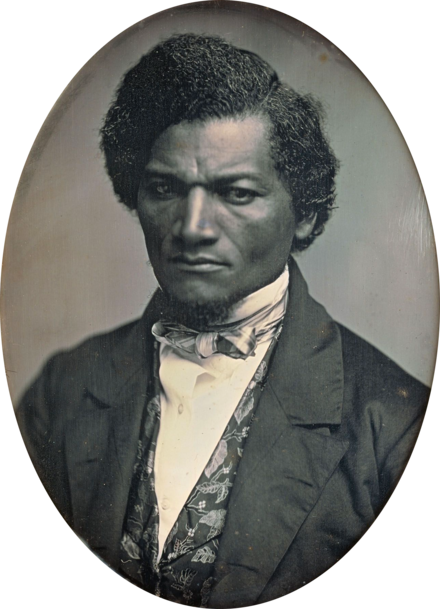
The Stono Rebellion (1739). On September 9, 1739, about 20 enslaved Angolans in South Carolina broke into a store. They took weapons. They began marching south toward Spanish Florida. Spain had promised freedom to escaped slaves from English colonies.
They killed 21 white colonists along the way. They recruited more enslaved people. The group grew to 60 to 100 fighters.
The colonial militia caught them. In the battle, 44 rebels were killed. In revenge, the colony executed dozens more. They put their heads on posts along the road as a warning.
South Carolina passed the Negro Act of 1740. It was one of the strictest slave codes in American history. It banned enslaved people from learning to read, gathering in groups, earning money, or growing their own food.
Nat Turner's Rebellion (1831). Nat Turner was an enslaved man in Southampton County, Virginia. He taught himself to read. He was seen as a preacher among the enslaved. He led the most important slave revolt in American history.
On August 21, 1831, Turner and a small group started a two-day campaign. They killed 55 to 65 white people. It was the highest white death toll from any slave revolt in U.S. history.
The white response was brutal. Militias killed about 120 Black people. Many had nothing to do with the revolt. Turner was captured after two months in hiding. He was tried and hanged on November 11, 1831.
His body was skinned. His skull was taken as a souvenir. His remains were boiled down into grease. Virginia then debated ending slavery. They decided instead to make the system even harsher.

Everyday Resistance. For every organized revolt, there were millions of small acts of daily resistance. These never made history books. They did not involve violence. Enslaved people broke tools. They faked illness. They worked slowly.
They poisoned livestock and set fires. They learned to read in secret. They kept forbidden religious practices alive. They ran away alone, in pairs, or in families.
The Underground Railroad ran from the late 1700s through the Civil War. It was a network of safe houses and guides. It helped about 100,000 enslaved people escape to the North or to Canada.
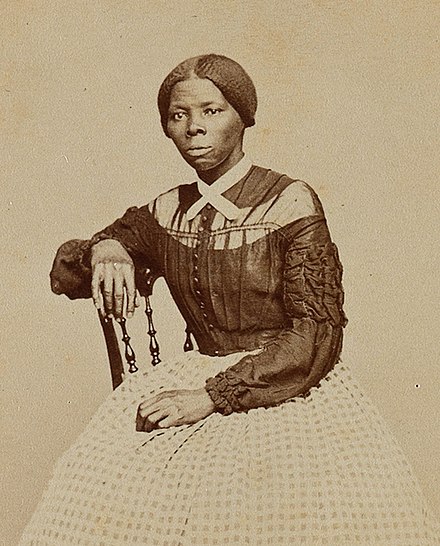
Harriet Tubman was the most famous conductor. She personally led about 70 people to freedom over 13 missions. She never lost a single passenger.
XIII. America’s Second Middle Passage — The Internal Slave Trade
In 1808, Congress banned the importation of enslaved Africans. Textbooks rarely explain that this ban did not slow slavery's growth.
It made the domestic slave trade the most profitable forced migration in the Western Hemisphere.
Between 1790 and 1860, about one million enslaved people were forcibly moved. They were taken from the Upper South to the Deep South. Historian Ira Berlin called this "the Second Middle Passage."
Virginia had more enslaved people than its tobacco economy needed. It became a breeding ground. Enslaved women were valued for their ability to bear children.
Slaveholders wrote openly about "natural increase" as a return on investment. They were calculating the profit from each child an enslaved woman would have.
The forced migration shattered families. Husbands were sold away from wives.
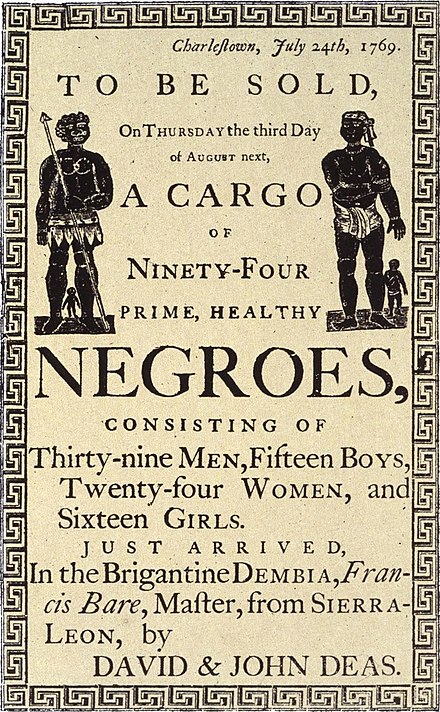
Children were taken from mothers. The auction block was a place of routine trauma. Newspapers advertised the sales with the same cold language used to sell horses.
"Prime field hand, 22 years, no defects." "Woman, 28, with two children aged 3 and 5. Will sell separately or together." These are not made-up examples.
They are copied directly from actual newspapers.
The last known slave ship to bring Africans to the United States was the Clotilda. It arrived illegally in Mobile Bay, Alabama, in July 1860. This was more than fifty years after the import ban. The ship's captain burned the vessel to destroy evidence.
The 110 Africans aboard were enslaved for five more years until emancipation. After the Civil War, a group of Clotilda survivors could not afford passage back to West Africa. They pooled their money and founded a settlement called Africatown near Mobile.
The last known survivor of the Clotilda was Cudjoe Lewis. He died in 1935. He had been born free in what is now Benin. He was captured in a raid, survived the Middle Passage, and was enslaved in Alabama. He was freed by the Union Army and lived to see the Great Depression. One life spanned all of it.
His oral history was recorded by Zora Neale Hurston in Barracoon. It was published after her death in 2018.

XIV. A Statistical Portrait of American Slavery
Numbers can hide suffering or reveal it. These numbers reveal it.
| Statistic | Figure | Source |
|---|---|---|
| Total Africans embarked on transatlantic slave ships | 12.5 million | Voyages Database (slavevoyages.org) |
| Deaths during the Middle Passage | 1.8 million | Eltis & Richardson, 2010 |
| Africans sent to British North America / U.S. | 388,000 | Voyages Database |
| Enslaved population in U.S., 1860 | 3,953,760 | U.S. Census, 1860 |
| Percentage of U.S. population enslaved, 1770 | about 20% | Berlin, 2003 |
| Percentage of Southern white families who owned slaves | about 25% | U.S. Census, 1860 |
| Value of enslaved persons as financial asset, 1860 | $3.5 billion | Baptist, 2014 |
| Adjusted value (2024 dollars) | $100+ billion | Baptist, 2014 |
| Enslaved people relocated in internal trade, 1790-1860 | about 1 million | Deyle, 2005 |
| Estimated runaways via Underground Railroad | about 100,000 | Bordewich, 2005 |
| Black Union soldiers in Civil War | 179,000 | National Archives |
| Years of legal slavery in the territory that became the U.S. | 246 | 1619-1865 |
U.S. Enslaved Population Growth (1790–1860)
U.S. Census Bureau, Historical Statistics of the United States
The Biological Cost of History Is Measurable. So Is Yours.
246 years of legal bondage left a measurable biological footprint across generations. Your own biological age is equally quantifiable — and the gap between your calendar age and your real age reveals more than you think.
Try 10 Free Bio Age Questions →Three hundred and eighty-eight thousand Africans were shipped directly to British North America. By 1860, that population had grown to nearly four million.
The growth was not driven by immigration. The import trade was banned in 1808. It was driven by what slaveholders called "natural increase." This meant enslaved women bearing children who were born into bondage.
Every generation of that increase was a generation whose labor was stolen. Their families could be shattered at any moment. Their humanity was denied by the law of the land.
XV. Timeline — From Ancient Chains to American Cotton
XVI. True Facts — What They Never Taught You
Enslaved people built the White House. Construction began in 1792. The labor force included both free and enslaved Black workers. They quarried the stone, sawed the timber, made the bricks, and laid the foundations.
White House Historical Association. “Building the White House.”Enslaved people built the United States Capitol. A marker was placed in 2012 to honor their work. The Statue of Freedom atop the dome was cast by an enslaved man named Philip Reid.
Architect of the Capitol. “Slave Labor.” National Archives, “Philip Reid and the Statue of Freedom.”George Washington rotated his enslaved servants. He moved them between Philadelphia and Virginia every six months. This was to avoid a Pennsylvania law that freed enslaved people after six months of living there.
Dunbar, Erica Armstrong. Never Caught — The Washingtons’ Relentless Pursuit of Their Runaway Slave, Ona Judge. Atria, 2017.Thomas Jefferson fathered at least six children with Sally Hemings. She was an enslaved woman he owned. DNA evidence confirmed this in 1998. Sally Hemings was also the half-sister of Jefferson’s wife.
Gordon-Reed, Annette. The Hemingses of Monticello — An American Family. W. W. Norton, 2008. DNA study, Foster, Eugene A., et al. “Jefferson Fathered Slave’s Last Child.” Nature, 1998.New York City did not fully abolish slavery until 1827. That was 52 years after the Declaration of Independence. Wall Street’s first major business was a slave market. It operated from 1711 to 1762.
Harris, Leslie M. In the Shadow of Slavery — African Americans in New York City, 1626-1863. University of Chicago Press, 2003.Haiti was forced to pay France for its freedom. After the Haitian Revolution, France demanded payment for lost “property.” This included the value of the freed enslaved people. Haiti paid the debt until 1947. The total cost is about $21 billion today.
Henochsberg, Michel. Public Debt, Sovereignty, and the Slave Trade — The Case of Haiti. 2011. The New York Times, “The Ransom,” May 2022.Twelve U.S. presidents owned enslaved people. Eight of them were slaveholders while serving as president. The first twelve presidents were all slaveholders except for John Adams and his son.
Wiencek, Henry. An Imperfect God — George Washington, His Slaves, and the Creation of America. Farrar, Straus and Giroux, 2003.The Three-Fifths Compromise gave slaveholding states extra power. It gave them 47 extra seats in Congress between 1790 and 1860. These seats represented enslaved people who could not vote. This extra power helped pass the Fugitive Slave Act of 1850.
Finkelman, Paul. Slavery and the Founders — Race and Liberty in the Age of Jefferson. 3rd ed. Routledge, 2014.Major corporations were involved in slavery. Aetna, JPMorgan Chase, and New York Life have admitted their past ties. Their old companies insured enslaved people or accepted them as loan collateral. JPMorgan said two of its old banks used about 13,000 enslaved people as collateral.
JPMorgan Chase & Co. public statement, January 2005. Aetna Inc., public apology, March 2000.Georgetown University sold 272 enslaved people in 1838. The sale paid off the university’s debts. It was worth about $3.3 million today. The enslaved people were sent to Louisiana. In 2019, Georgetown students voted for a reparations fund. The university has found over 12,000 living descendants.
Swarns, Rachel L. “272 Slaves Were Sold to Save Georgetown. What Does It Owe Their Descendants?” The New York Times, April 16, 2016.The Thirteenth Amendment did not fully abolish slavery. It allows slavery as punishment for a crime. This exception was used right away. The convict leasing system re-enslaved thousands of Black men on false charges.
Blackmon, Douglas A. Slavery by Another Name — The Re-Enslavement of Black Americans from the Civil War to World War II. Doubleday, 2008.The last known American held in slavery died in 1971. Sylvester Magee of Mississippi said he was born into slavery in 1841. His exact birth date is debated. But his life connected the era of legal slavery to the Civil Rights Movement.
Mississippi Department of Archives and History records. Associated Press obituary, October 1971.XVII. The Weight of Knowing
You have read a small part of the history of slavery. This is not the cleaned-up textbook version.
It is not the easy dinner-table version. This history is in court records and ship logs. It is in auction ads and insurance policies.
It is in letters from slaveholders. They wrote about their finances with cold detachment. They wrote as if discussing a livestock operation.
Because to them, that is what it was.
That is exactly what it was.
There is a temptation to retreat into comfortable positions. You might say, That was a long time ago. The last survivor of the Clotilda slave ship died in 1935.
That is within the lifetime of people alive today.
You might say, But other people had slavery too. They did. No other nation built a racial caste system to carry it forward. No other nation built the world’s wealthiest country on its foundation.
You might say, I didn’t own any slaves. No. But you live in an economy built by people who did. You attend institutions and drive on roads they built. You benefit from a financial system they created.
The purpose of knowing this history is not guilt. Guilt is useless.
Guilt changes nothing. The purpose is clarity. This clarity makes it impossible to hear certain arguments seriously. It makes it impossible to accept certain myths.
It makes it impossible to walk past certain monuments without knowing what they celebrate.
James Baldwin wrote, “Not everything that is faced can be changed, but nothing can be changed until it is faced.”
This article is an act of facing. What comes next is up to you. But what came before is not debatable. It is documented.
The documentation is not a metaphor.
246 years of legal bondage. 161 years of nominal freedom. 12.5 million people were forced onto ships. 1.8 million died on the journey. 3.95 million were enslaved at the peak. Their value was $3.5 billion. That was more than all railroads and banks combined.
1 million people were forcibly moved in the domestic slave trade. Only 8 percent of high school seniors know slavery caused the Civil War. Zero states require full slavery education.
The numbers are not a metaphor. They are a diagnosis.